By Jenniffer Paez
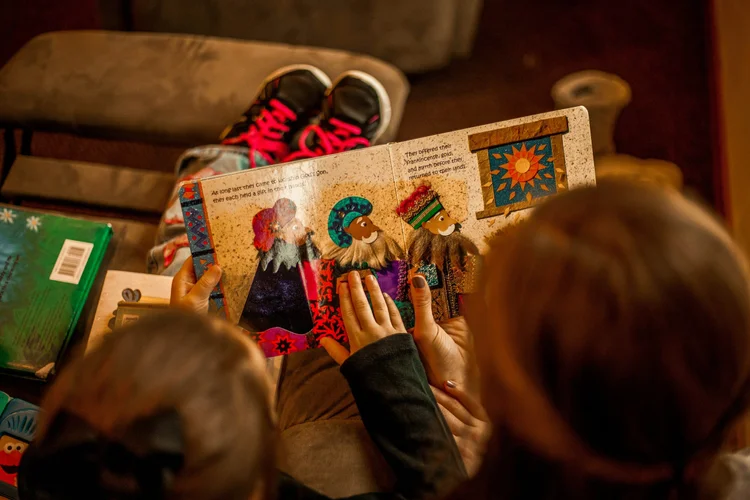
Quick Answer: Reading aloud in two languages builds vocabulary, listening skills, and comprehension in both languages at once — it doesn’t split a child’s attention, it strengthens it. At Pequeños Genios, bilingual story time happens every day, an interactive daily anchor where children hear the same stories, songs, and vocabulary woven naturally between Spanish and English.
More Than a Story: A Daily Language Foundation
Story time can look like simple downtime from the outside — a caregiver, a book, a group of kids sitting still for a few minutes. But for young children, especially in a bilingual setting, it’s doing a lot of quiet work underneath the surface.
Every story read aloud is building vocabulary, modeling sentence structure, and showing children how language actually works — in real time, in context, attached to pictures and feelings and plot.
Doing that in two languages doesn’t dilute the effect. If anything, it reinforces it. A systematic review of biliteracy research found consistent benefits from reading and writing in two languages, both for bilingual children and for adult second-language learners — the skills built in one language don’t stay siloed there; they support literacy development across both.
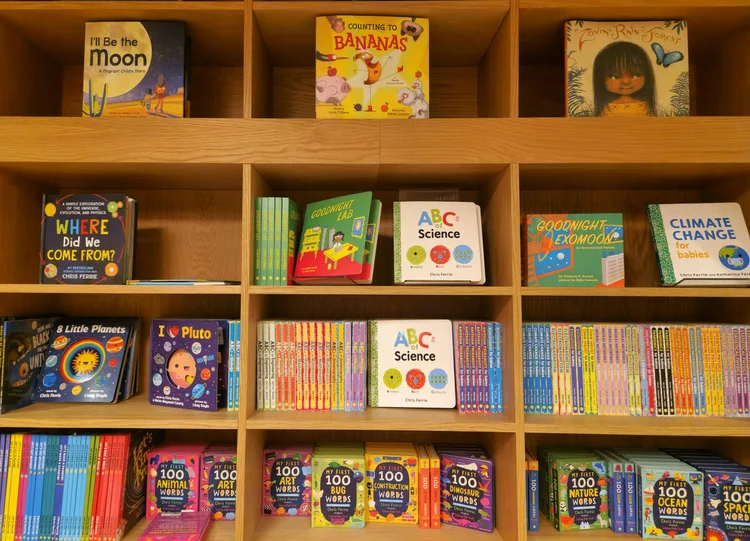
Why Reading in Two Languages Isn’t «Extra Work» for a Child’s Brain
A common worry we hear from parents, especially English-only families, is whether hearing a story read in Spanish makes it harder for their child to follow along or to eventually read in English. The research points the other way. Developing a strong foundation in a child’s home language actually supports later literacy in a second language, rather than working against it — the two aren’t competing for space, they’re building on each other.
That tracks with what we see day to day. Children don’t experience Spanish and English as two separate systems fighting for attention. They experience story time as story time — a rhythm of voice, repetition, and pictures that happens to include two sets of words for everything.
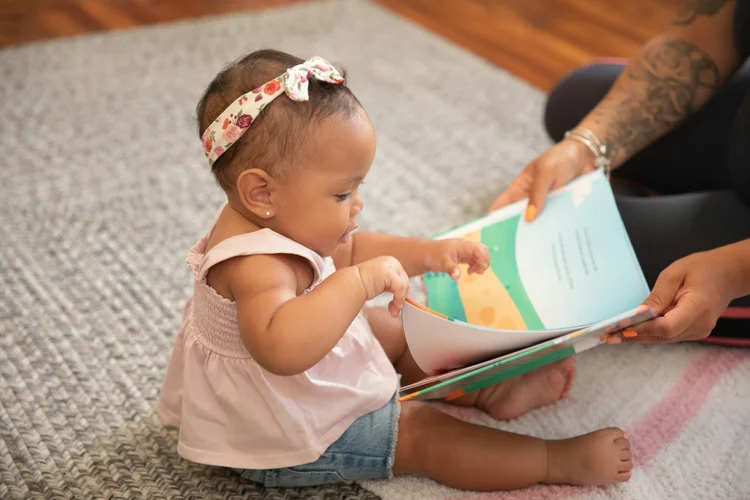
What Bilingual Story Time Actually Looks Like at Pequeños Genios
Story time happens every day, and it’s genuinely interactive rather than a straight read-through. It’s woven through the day in a few different ways:
The same story, both languages, with real back-and-forth. A caregiver might read a page in English, pause to ask open-ended questions and talk about what’s happening, then read the same part in Spanish and ask questions again — translating key vocabulary and reinforcing important words along the way. Other times it flips: English explained in Spanish, or the whole thing kept in one language. It depends on the book and how the moment is flowing with the children.
Songs and rhymes in both languages. Repetition through song is one of the easiest ways young children absorb new vocabulary, and it happens constantly during transitions, not just during a dedicated «reading» block.
Playful attention-getting. Different tones of voice, rhymes, puppets, and the occasional surprise — like holding the book upside down just to spark curiosity — keep children engaged and participating rather than just listening passively.
New vocabulary introduced monthly. Story time ties into broader curriculum themes, so the words children hear in books connect to what they’re doing hands-on that month.
Mixed-age listening. Because our groups include a range of ages, older children often narrate or «help» tell parts of a story to younger ones — which reinforces the material for both.
For us, story time was never really about simply finishing a book. It’s about getting children to think, answer questions, make connections, and genuinely enjoy the story — every single day.
One of the things that surprises parents most is how much their child understands before ever speaking a word of Spanish. Families often notice their child already following along with daily routines in Spanish, long before they start responding in it themselves — story time is often where that comprehension takes root first.
For English-Only Families Specifically
If Spanish isn’t spoken at home, bilingual story time doesn’t require anything different from you. Your child doesn’t need a head start in Spanish to benefit from hearing stories in it — comprehension builds first, response comes later, and it happens gradually and without pressure. Many parents are surprised within a few months to hear their child singing a song or naming an object in Spanish at home, without any deliberate practice outside of daycare hours.

The Long-Term Payoff
Story time is one of those small daily habits that compounds. A child who’s regularly read to in two languages isn’t just picking up vocabulary — they’re building the metalinguistic awareness that tends to make bilingual readers stronger readers overall, in either language, later on.
Looking for Bilingual Story Time as Part of Daycare in Sultan, WA?
If you’re a Sultan-area parent looking for a childcare program where bilingual literacy is built into the daily routine — not treated as a separate lesson — Pequeños Genios weaves Spanish and English story time, songs, and vocabulary naturally throughout the day for children of all ages.

What Makes Pequeños Genios Special?
Pequeños Genios Bilingual Childcare is a licensed home-based program in Sultan, WA serving children ages 3 months to 13 years. We provide full bilingual immersion (Spanish and English) paired with a Montessori Hybrid approach — blending Montessori independence, Reggio Emilia-inspired exploration, and play-based learning — inside a small, home-based setting rated Early Achievers Level 3 Plus and continuing to grow toward Level 4. We accept DSHS/WCCC childcare assistance.
Curious what a typical bilingual story time looks like here? Reach out — [email protected], (360) 554-9353, or visit our contact page.
FAQ on Bilingual Story Time
Does my child need to already speak Spanish to benefit from bilingual story time? No. Many of our families are English-only at home. Children build comprehension first, simply by hearing stories, songs, and routines in Spanish regularly — speaking tends to follow naturally afterward.
Will bilingual story time slow down my child’s English reading skills? No. Research shows a strong foundation in one language supports literacy development in a second language rather than competing with it. Bilingual exposure doesn’t come at the expense of English skills.
How often does story time happen, and in which language? Story time happens every day. It’s interactive rather than a straight read-through — caregivers might read a page in English, ask questions, then read it again in Spanish and ask again, translating and reinforcing vocabulary along the way. The exact language pairing depends on the book and how the activity is flowing with the children that day.
Do older and younger children do story time together? Yes. Our mixed-age groups mean older children often help narrate or retell parts of a story to younger children, which reinforces the material for both age groups.
What if I don’t speak Spanish at home — can I still support this? Yes. You don’t need to speak Spanish yourself. Simple things like asking your child to teach you a word or a song they learned help reinforce what they’re absorbing during the day.
Is bilingual story time part of a specific curriculum, or more informal? It connects to our broader monthly curriculum themes, so the vocabulary children hear in stories ties into hands-on activities they’re doing that same month.