By Jenniffer Paez
Quick Answer: Sensory play lets young children learn by exploring real materials with their senses. This fall at Pequeños Genios, that means painting with fall colors, seasonal sensory and art experiences, and seasonal foods, all child-paced and focused on the process, not the product. Children explore in their own way, and no child is ever forced to touch something they’re uncomfortable with.
What does learning look like when the leaves start to change?
At Pequeños Genios, one answer is hands-on: children painting, touching, tasting, and exploring the season at their own pace. Here’s what fall sensory play looks like here, why it matters, and how you can try it at home.
Why Does Sensory Play Matter for Young Children?
Sensory play is play that engages the senses, and for young children it’s one of the most natural ways to learn. The American Academy of Pediatrics describes object play as what happens when a child explores an object and learns about its properties, beginning with early sensorimotor exploration and growing into language and abstract thought. In its clinical report on the power of play, the AAP also notes that the benefits of play include improvements in executive function, language, early math skills like numerosity and spatial concepts, and social development.
Simple materials work beautifully. The same report points out that children’s play and creativity are enhanced by inexpensive, everyday objects, and that it’s a caregiver’s presence and attention, not elaborate gadgets, that enriches a child.
Researchers call open-ended materials like acorns, cardboard, and fabric «loose parts.» A 2025 systematic review of 25 studies of children ages 0 to 6 found that many reported positive links between play materials and cognitive development, including language. A few found no link, and the authors note the research is still limited. In other words, the evidence is promising, not magic, and it fits what we see every day: children love to explore real things.
What Fall Sensory Activities Do We Do at Pequeños Genios?
We love bringing fall into our learning experiences, and the exact activities change with the children in our care, their ages, and what they’re curious about. Here’s what fall often includes.
Painting With Fall Colors: What Are Children Learning?
Painting with fall colors lets children explore the season through color and movement. Some children reach for a brush, others go straight in with their hands, and every child experiences the paint in their own way. Along the way, words for colors, sizes, and shapes come up naturally in Spanish and English, and making marks on paper gives little hands practice with the control they’ll use later for things like holding a crayon.
Seasonal Sensory and Art Experiences: What Are Children Learning?
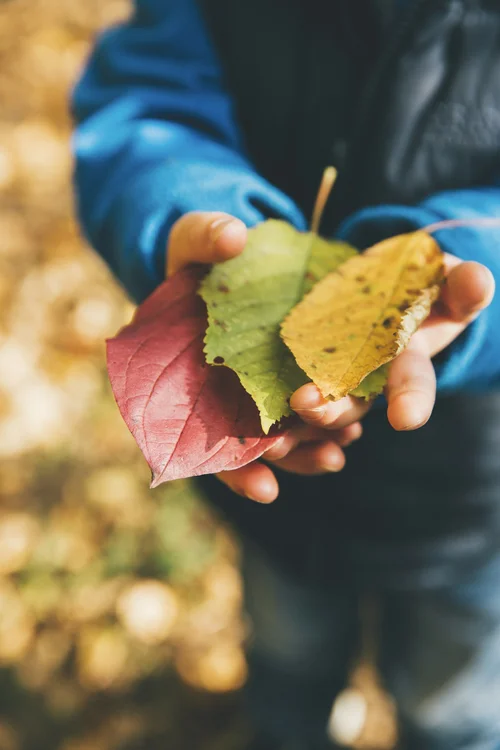
Beyond painting, we offer seasonal sensory and art experiences that invite children to notice, compare, and describe what they feel. Fall words like hojas (leaves) and calabaza (pumpkin) can come up naturally, along with texture words like suave (soft), áspero (rough), and crujiente (crunchy), and words for temperature and shape. There’s no set project every child has to follow. Children explore the materials in whatever way fits their age and stage.
Seasonal Foods as a Sensory Experience: What Are Children Learning?
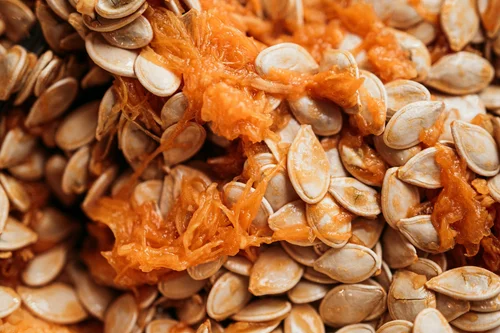
Food can be a sensory experience, too. We prepare homemade, varied, and nutritious meals, and in the fall that includes special foods connected to the season. At the table, children explore different colors, smells, tastes, and textures, and they pick up words to describe them in two languages. It’s a simple, everyday way for the season to become part of how children learn.
Why Do We Focus on the Process, Not the Final Product?
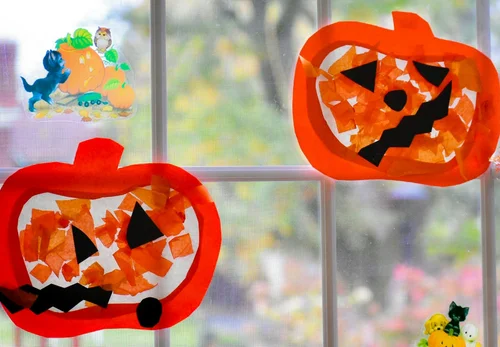
We don’t expect every child to create the same project or bring home a beautiful, perfect piece of art. Especially with young children, the process matters much more to us than the final product: mixing colors, feeling a new texture, noticing what happens when something changes. What each child makes, and how they take part, depends on their age, their developmental stage, and how they want or are able to participate.
What If My Child Doesn’t Want to Touch It?
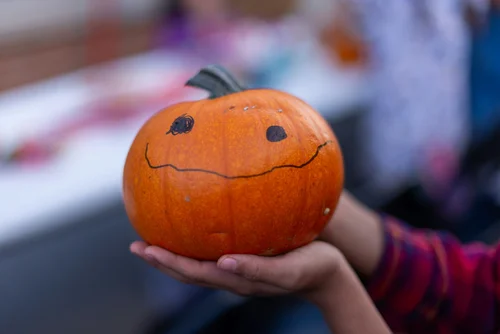
That’s completely okay. One child may love putting their hands right into the paint or touching every new texture, while another may not like getting their hands messy or may not want to touch something like a pumpkin at all. We respect both.
When a child hesitates, we might invite them to join, offer another way to explore, hand them a tool like a brush or spoon, let them watch from nearby, or simply give them more time. We never force a child to touch or experience something they’re uncomfortable with.
How Does Sensory Play Fit Our Montessori Hybrid Approach?
Hands-on materials, a prepared environment, and child-paced learning are core Montessori principles that we embrace. We blend them with play-based learning, art, and sensory experiences, and fall sensory play is that blend in action. We prepare the experience and offer the opportunity, and then we respect each child’s choice about how to explore it: what to touch, how long to stay, and what to discover.
That child-led approach has research behind it. The AAP describes «guided play» as a child-led, joyful activity in which adults craft the environment to optimize learning, and it even uses a Montessori task as an example. The report also describes a study in which preschoolers who explored objects with minimal adult direction came up with about three times as many unconventional uses for an object as children who were given specific instructions.
For us, the activity is never the point by itself. Jenniffer puts it this way:
«The children may not remember all the activities they did with us, but they will remember how we made them feel. For me, that is the most important lesson we can leave them with.» — Jenniffer Paez, Owner, Pequeños Genios
How Do Sensory Activities Work for Different Ages?
Our curriculum is designed for mixed-age groups, so everyone shares the same experience while each child learns at their own developmental stage. Older children take on age-appropriate challenges, like mixing colors, comparing, and describing what they notice. Younger children take part at their own pace, and that might mean watching for a while or exploring a single new texture for a long, happy stretch.
Age matters when choosing materials, too. Children who still explore with their mouths need safe, age-appropriate items and an adult close by, so keep small pieces away from the youngest explorers, and keep allergies and choking hazards in mind whenever food is part of the experience.
Can You Try Fall Sensory Play at Home?
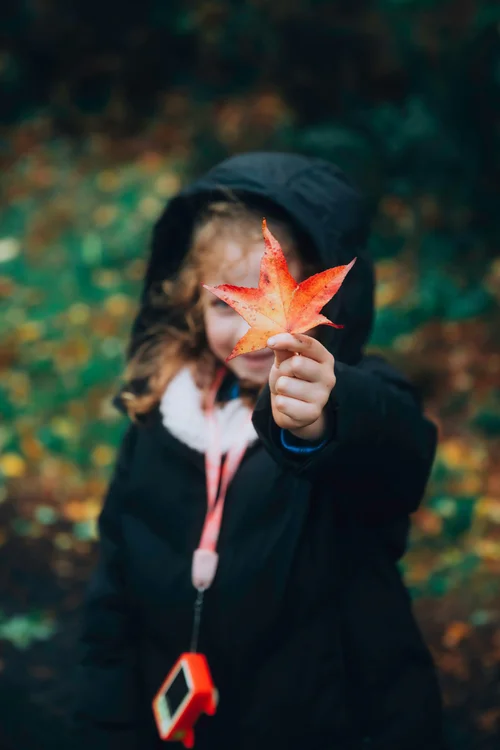
Absolutely. You don’t need special supplies:
Paint with fall colors: Set out a few fall shades with paper and brushes, and let your child explore however they like, with fingers, brushes, or just by watching at first.
Explore a seasonal food together: Choose a fall food your child can safely eat, and notice its color, smell, texture, and taste together. Keep food allergies and choking hazards in mind, especially with little ones.
Focus on the process: Skip the goal of a finished masterpiece. The mixing, touching, and noticing are the learning.
Follow your child’s comfort level: If your child doesn’t want to touch something, offer a tool, let them watch, or try again another day.
Stay close and talk: Name the colors, textures, and tastes your child notices, in whatever language or languages you like, and wash hands when you’re done.
What Should Families Take Away?
Young children learn by exploring real materials with their senses
Simple, everyday materials work well, and the research on them is promising
The process matters more than the finished product
Children should be invited to explore, never forced
Child-led exploration, with an adult setting the stage, helps children discover more
Mixed-age groups let everyone share an experience at their own level
Is There a Montessori Hybrid Daycare Near Sultan in Snohomish County?
Yes. Pequeños Genios is a licensed, home-based bilingual daycare in Sultan, WA, in Snohomish County. Our Montessori Hybrid approach blends hands-on materials, sensory experiences, and play-based learning for children 3 months to 13 years, and we accept DSHS/WCCC childcare subsidy.

What Makes Pequeños Genios Special?
Licensed home childcare in Sultan, WA through Washington State DCYF, and an Early Achievers Level 3 Plus program continuing to grow toward Level 4
Bilingual immersion: Spanish is woven through our routines, songs, meals, and play, with English used whenever it’s needed to keep every child safe and understood
Montessori Hybrid learning: core Montessori principles blended with play-based, outdoor, sensory, and project-based experiences
Mixed-age groups, predictable routines, and homemade meals
Ages 3 months to 13 years, Monday through Friday, 6:00 AM to 5:30 PM
DSHS/WCCC accepted
Ready to see if we’re the right fit? Contact us to schedule a tour, or start your registration. You can also call us at (360) 554-9353 or email [email protected]. We’re located at 107 Willow Avenue, Sultan, WA 98294.
Frequently Asked Questions
What is sensory play, and why does it matter for young children? Sensory play is hands-on play that engages a child’s senses, such as touching, scooping, sorting, and listening. The American Academy of Pediatrics describes object play as how children explore an object and learn its properties, and notes that play supports executive function, language, early math skills, and social development.
What fall sensory activities does Pequeños Genios do? We bring fall into our learning through painting with fall colors, seasonal sensory and art experiences, and special foods connected to the season. The exact activities vary with the children’s ages and interests, and every experience is child-paced and hands-on, with children describing what they discover in Spanish and English.
How does sensory play fit a Montessori Hybrid program? Hands-on materials, a prepared environment, and child-paced learning are core Montessori principles that we embrace. We blend them with play-based learning, art, and sensory experiences, so we prepare the experience and offer the opportunity, while each child chooses how to explore it.
Is sensory play safe for babies and toddlers? It can be, with age-appropriate materials and an adult close by. Babies and toddlers often explore with their mouths, so choose safe objects that are not choking hazards, keep food allergies in mind, and supervise closely.
Can children of different ages join the same sensory activity? Yes. Our curriculum is designed for mixed-age groups, so everyone shares the same experience while each child learns at their own developmental stage. Older children find age-appropriate challenges, and younger children take part at their own pace.
How can I set up fall sensory play at home? Try painting with fall colors or exploring a seasonal food together, noticing colors, smells, textures, and tastes. Focus on the process rather than a finished product, follow your child’s comfort level, stay close, and keep food allergies and choking hazards in mind.
What if my child doesn’t like messy or sensory play? That’s completely okay. At Pequeños Genios, we never force a child to touch or experience something they’re uncomfortable with. We might invite them to join, offer another way to explore, give them a tool like a brush or spoon, let them watch, or simply give them more time.